
Affinity Hub
Affinity Hub is RAPP's proprietary AI-powered platform that transforms static customer journey mapping into a live, always-on intelligence and activation system. I came in to lead the redesign and build it from the ground up: new design system, new architecture, new interaction model. It's currently in active development with client pilots underway, and was debuted publicly at Adobe Summit 2026.
COMPANY
RAPP (Omnicom)
Role
Lead UX Designer
Timeline
Late 2025 – Present
Tools
Figma, Miro, Lovable, Claude
Why needed
Journey mapping had been a core RAPP capability for over a decade. The output was always the same: a static artifact that lived in a deck and went untouched after the presentation.
A prior design direction existed when the project came to me. Leadership wasn't satisfied — the visual language didn't match the platform's ambition, and the interaction model wasn't built to scale. I was brought in as sole lead designer to start over: define the system, establish the design language, and build something that could actually be taken to market.
1
Build the System Before the Screens
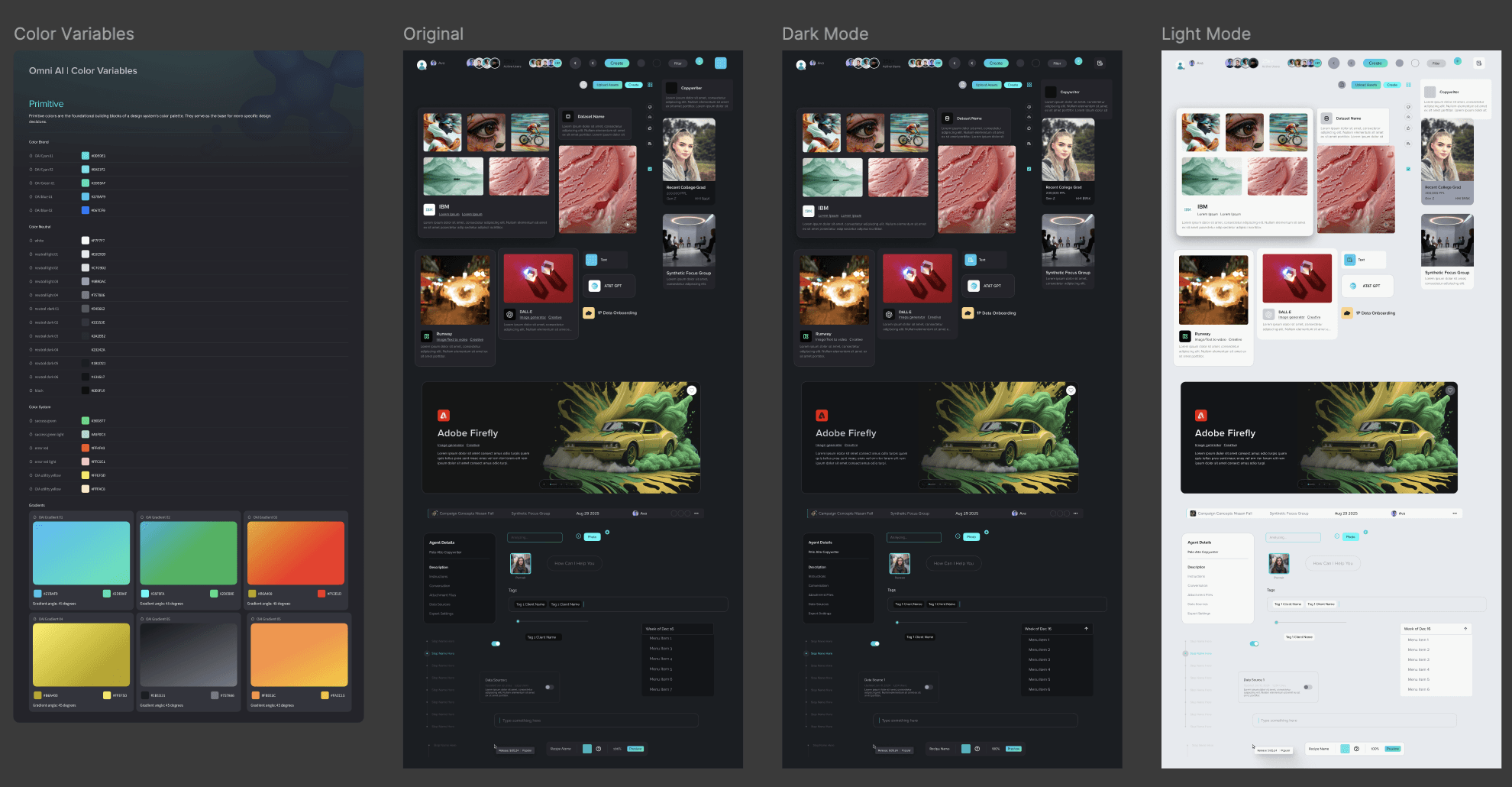
The first thing I did wasn't open a new Figma file for screens. It was build the design system.
The prior design had none. Without shared components, every screen would be a one-off, handoff would be impossible, and the product couldn't scale as new modules were added. I established color, typography, component library, interaction states, and iconography before designing a single product screen — then used the system as the constraint for everything that followed.
2
Defining Scope with Leadership
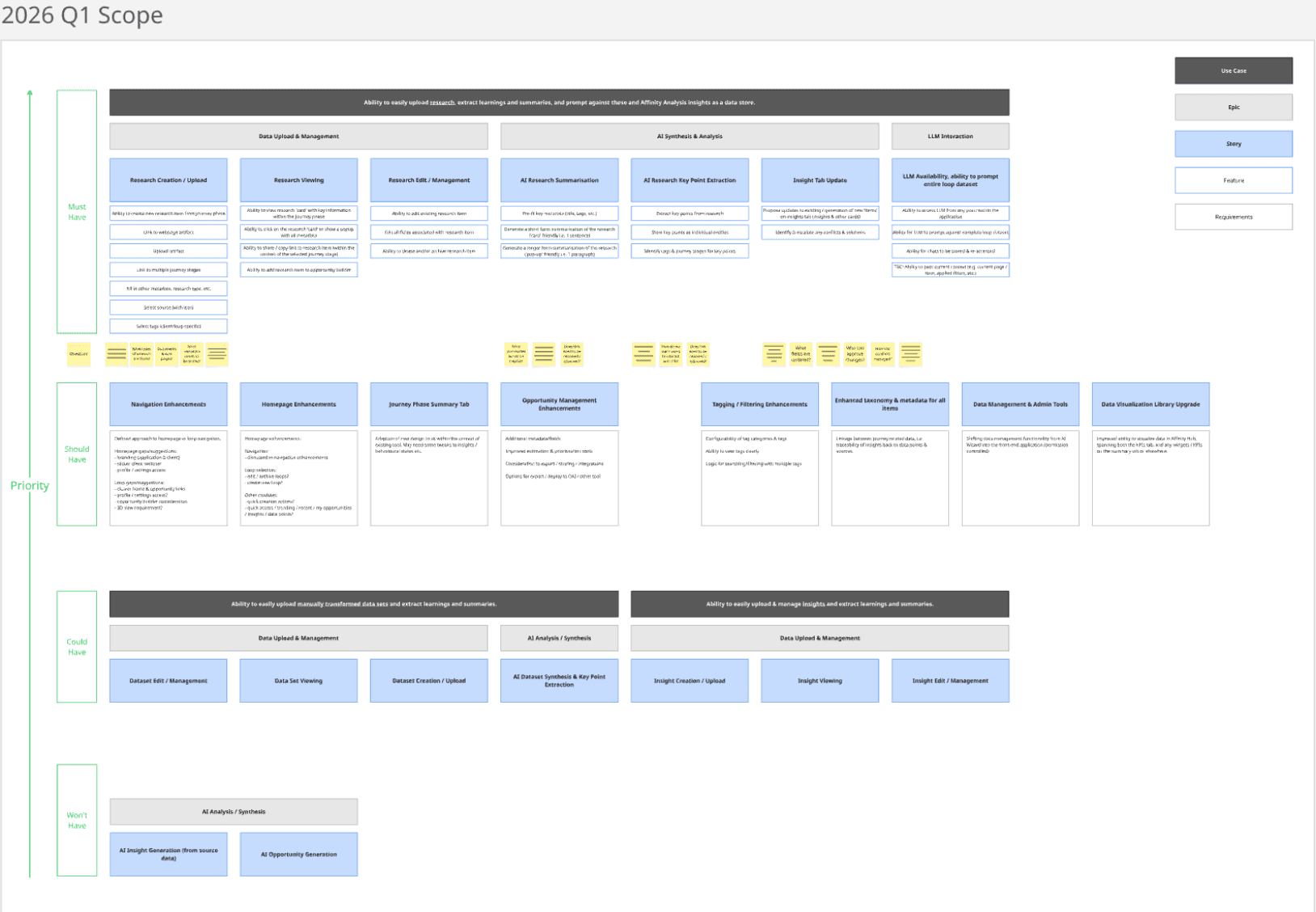
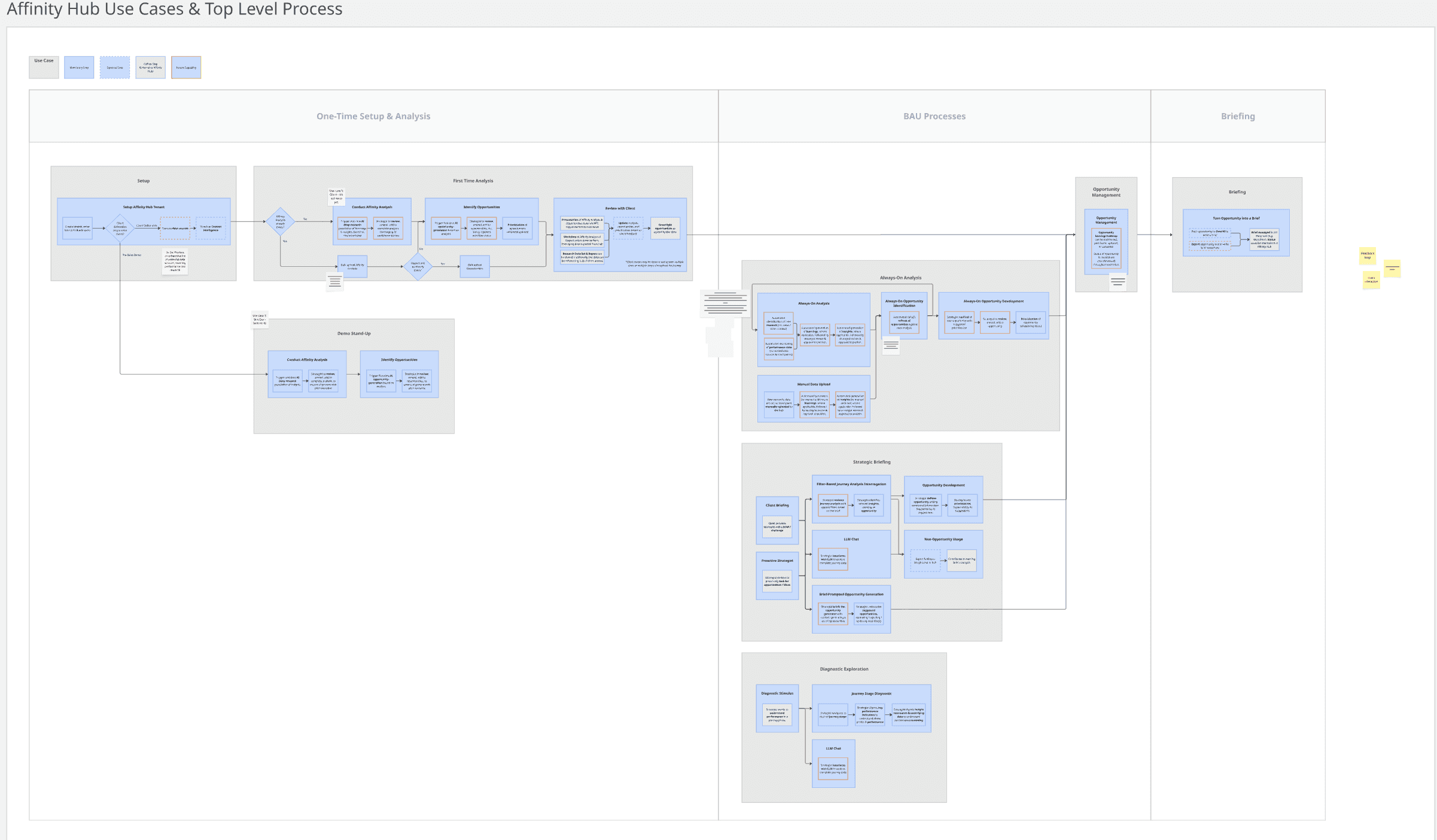
Before going deep on any module, I worked directly with RAPP's executive leadership and strategy leads to define what the platform actually needed to do and in what order.
This wasn't just stakeholder management — it was product definition. Features were being added as the business case evolved. My job was to translate a moving vision into a stable design foundation that development could build against without being blocked. We aligned on a core user workflow first, then built the roadmap around it.
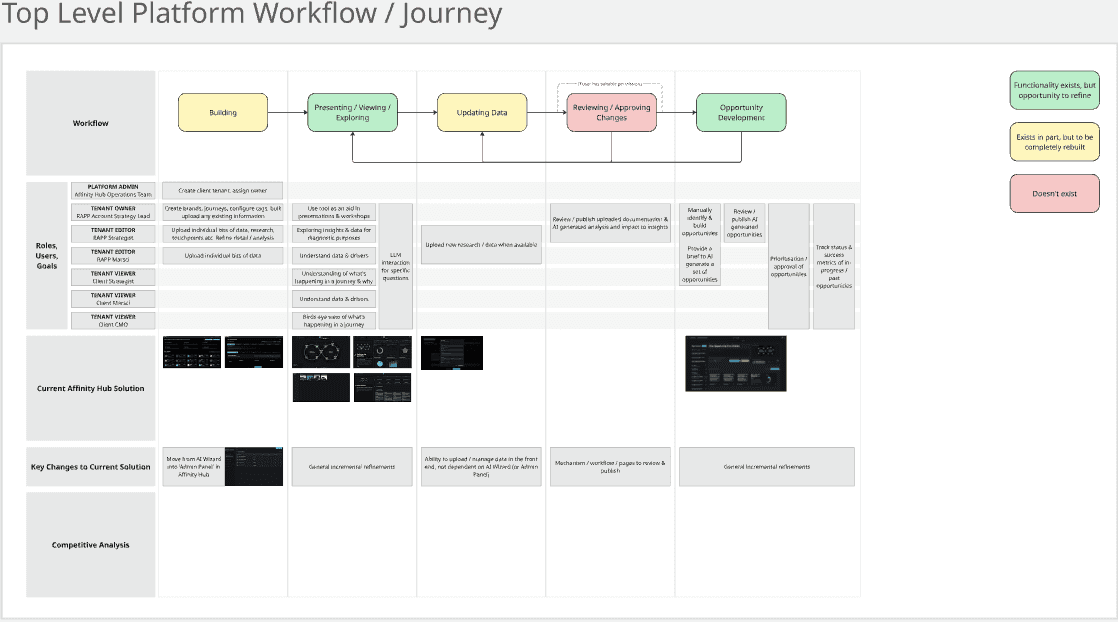
The redesign had to address all three — not just visually, but systemically.
3
Designing for Multiple Users at Once
One of the harder design problems was that the platform served fundamentally different users:
The Strategist
needs to explore journey data quickly, identify high-impact moments, and generate briefing materials without leaving the platform.
The Client / Senior Stakeholder
needs a clear, confidence-inspiring view of the journey and the opportunities it surfaces. Doesn't want to dig through raw data.
The Activation Team
needs outputs that connect directly to channel planning and content execution without reformatting everything manually.
The same interface had to work for all three without overwhelming any of them. That drove the information architecture decisions — specifically, how much to show at each level, and what interactions revealed depth without requiring it.
4
Making the Journey Interactive
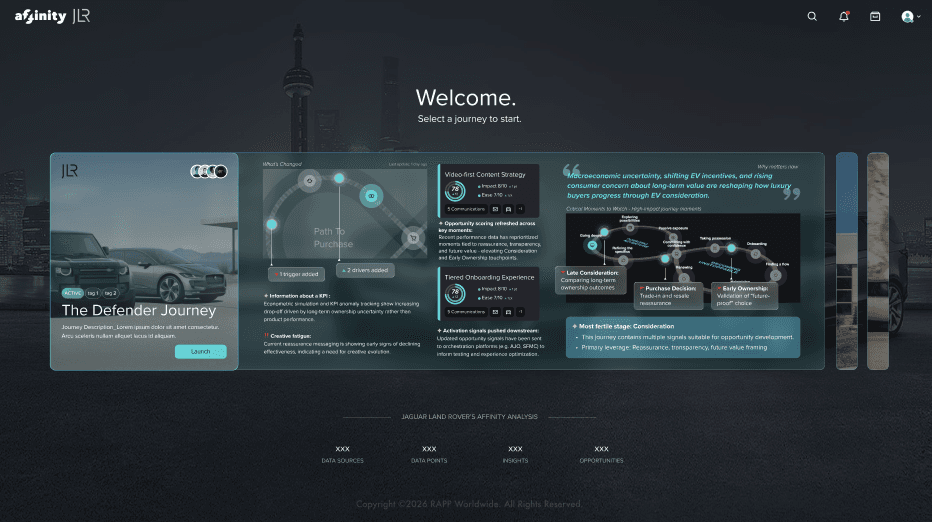
The centerpiece of the platform is the Affinity Loop — RAPP's proprietary journey visualization framework. In every prior version, it was a static diagram. One of my core design decisions was to make it the interactive anchor of the entire product.
Each node on the loop is clickable, filterable by audience and market segment, and connected to the insight and opportunity layers beneath it. The loop isn't decoration — it's the navigation system.
(Still under development)
5
Low to High Fidelity
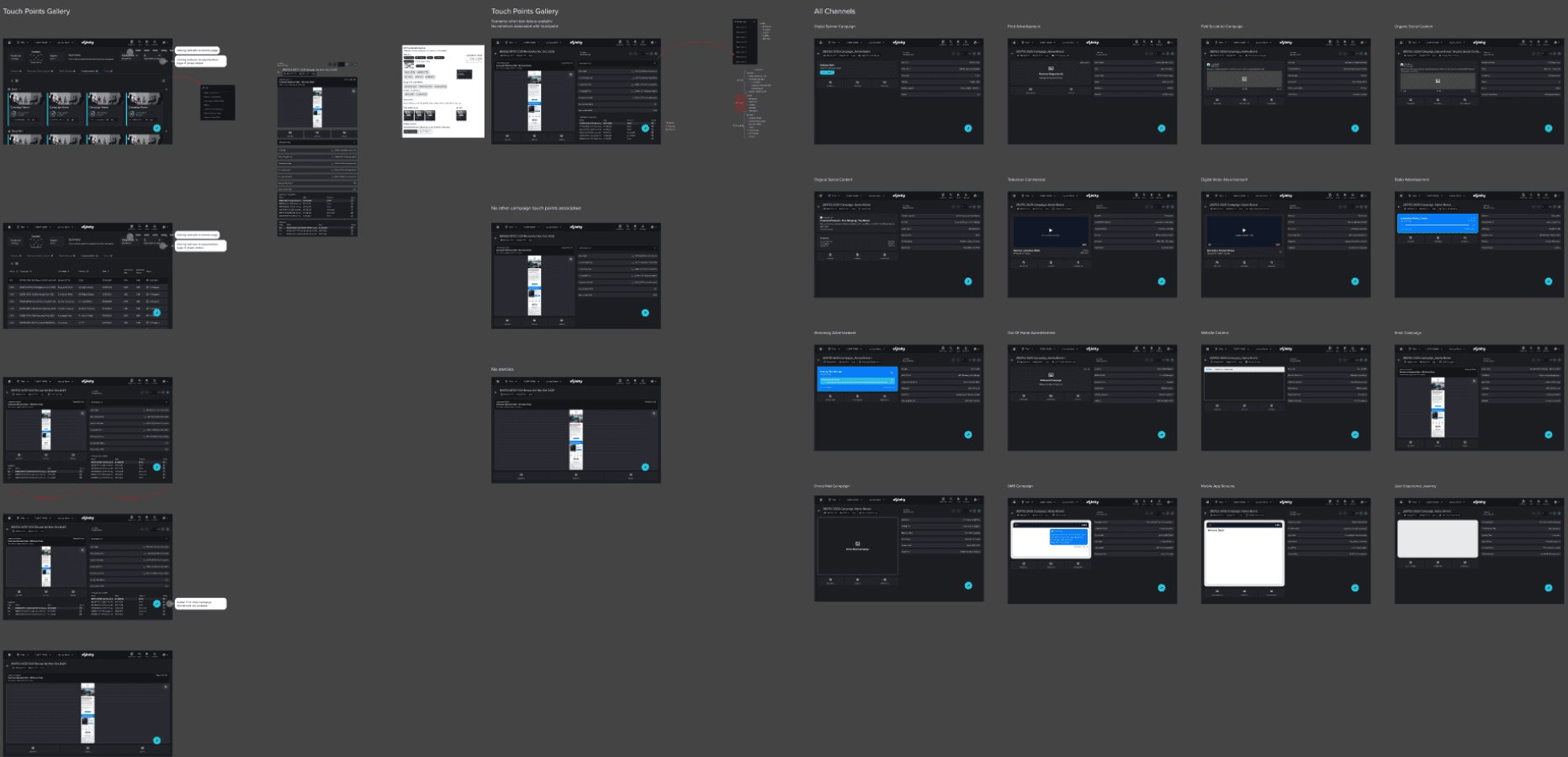
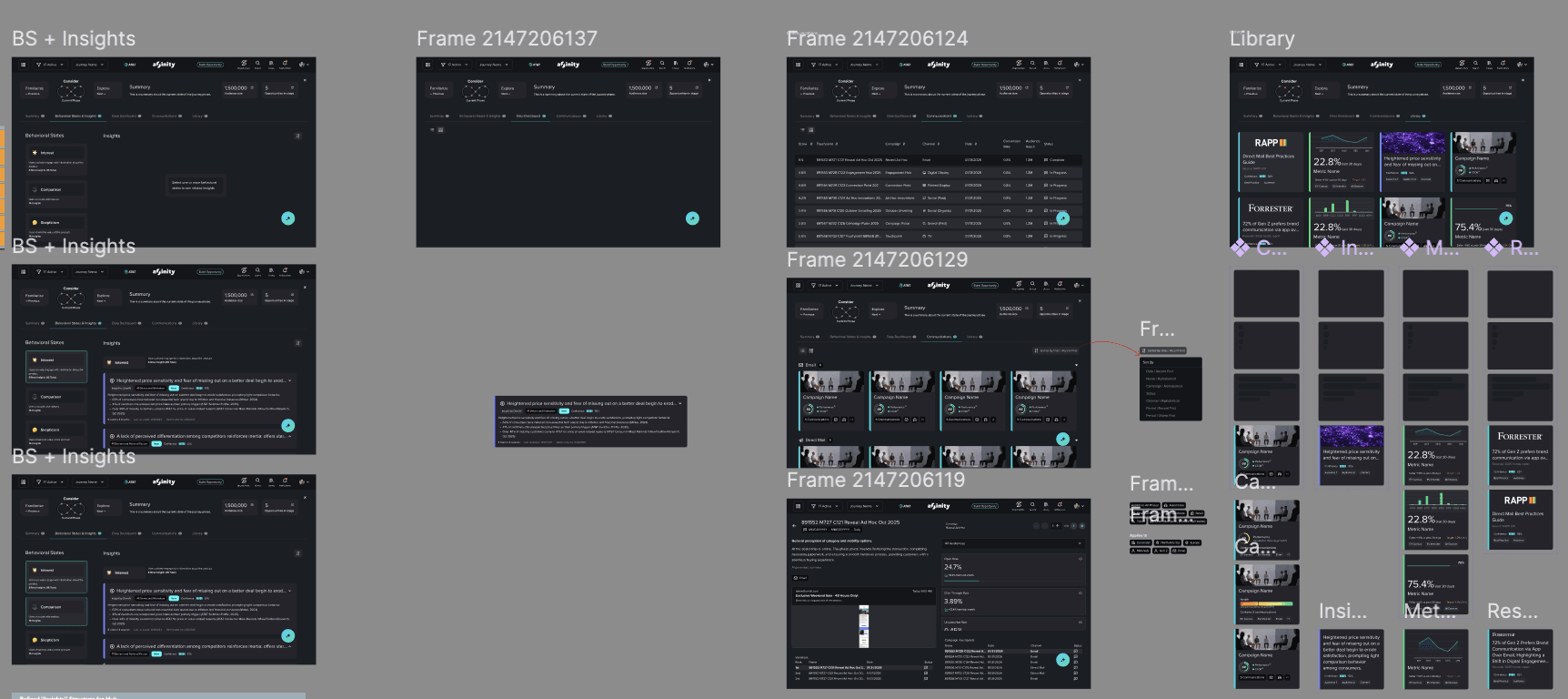
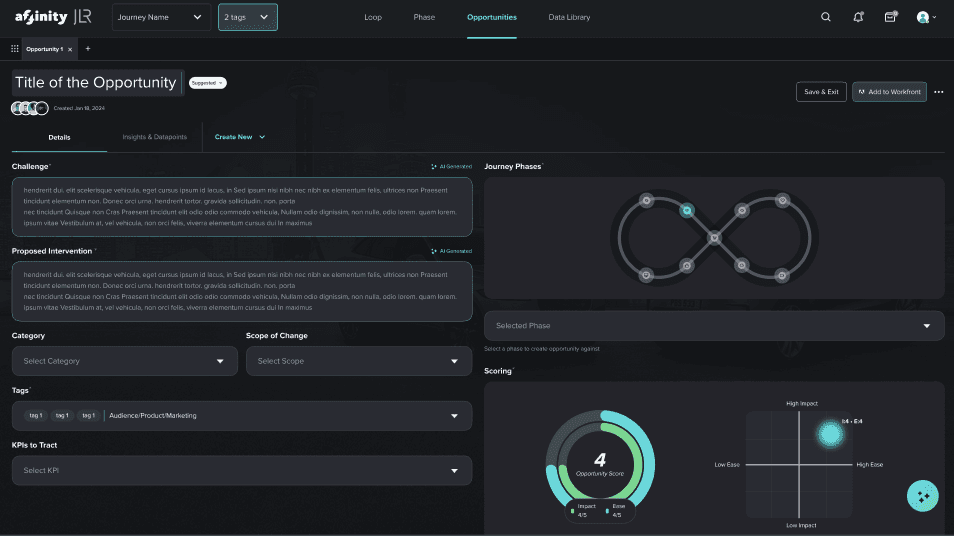
From wireframes through hi-fidelity, I designed across the full platform: the interactive journey visualization, insight panels, opportunity modeling, AI-assisted briefing, and content activation flows. Switching between Figma, Lovable and Claude, I build and test interactions throughout the entire process to make sure everything is pixel perfect. Stakeholder reviews with executive leadership and working sessions with strategists also ran throughout - shaping decisions on navigation, information hierarchy, and where the AI layer should and shouldn't be visible.
6
Staying Embedded Through Build
Handoff wasn't a single event. As modules cleared stakeholder review, I moved them directly to the engineering team with annotated specs, component documentation, and edge case definitions.
I stayed closely embedded through build — reviewing implementations weekly, returning to design to resolve gaps as they emerged in code. The design system made this sustainable: when something needed to change, it changed in one place.
Outcome
In 2026, Affinity Hub was presented publicly for the first time at Adobe Summit — one of the largest marketing technology conferences in the world — by RAPP's Global Chief Strategy Officer. For a platform still in active development, it was a meaningful moment: the design was production-ready enough to represent the company on one of the largest marketing technology stages in the world.
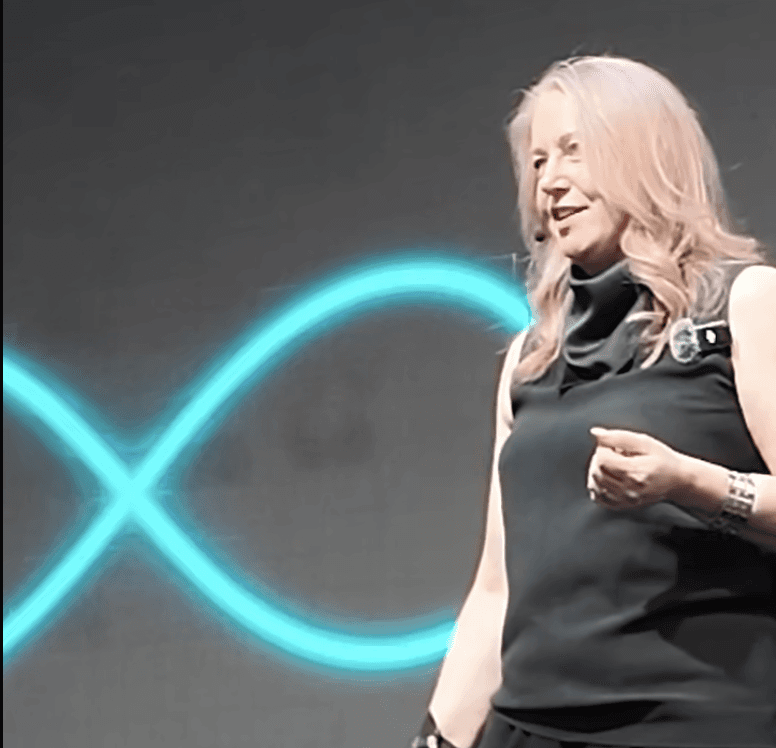
RAPP's Global Chief Strategy Officer
Shiona McDougall at 2026 Adobe Summit
Click to see the full video
Affinity Hub is in active development with client pilots running. What started as a redesign brief became a full commercial product — a new line of business for RAPP built entirely on the design system and interaction model established in this work.